Expertise in Exclusive Antiques
About us
who we are
Daniels Antiques continues to set the bar for luxury antiques and rarities, transcending the traditional idea of antiques into a space that is all their own. Our collection is eclectic, but one mission dictates the acquisition of every single piece: find the finest examples of rarities and antiques ever produced that will appeal to the modern, discerning customer.

Michael Daniels
Founder & Owner of Aspen Location
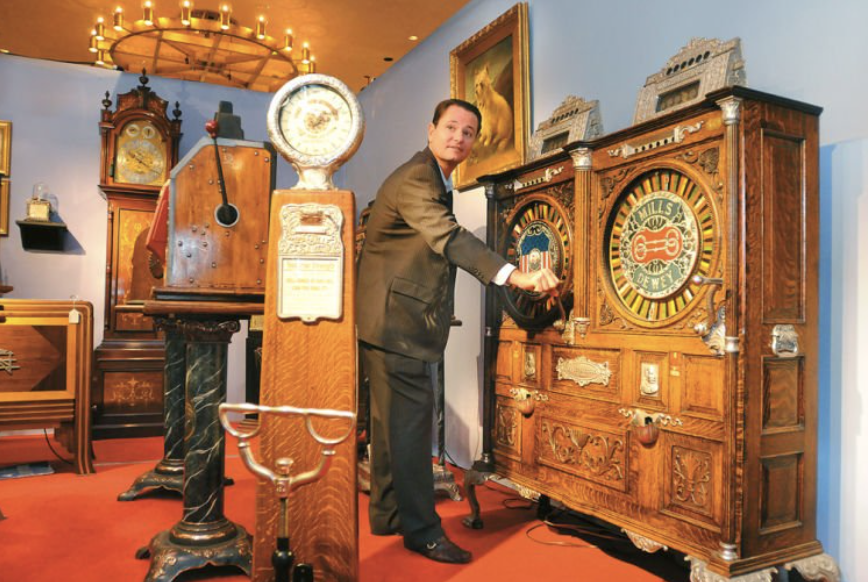
Jonathan Daniels
Owner of Las Olas Location
Simon Daniels
Owner of Aspen Location

✯ Daniels Selection ✯
Latest Antiques
✯ Daniels Selection ✯
Curated Inventory
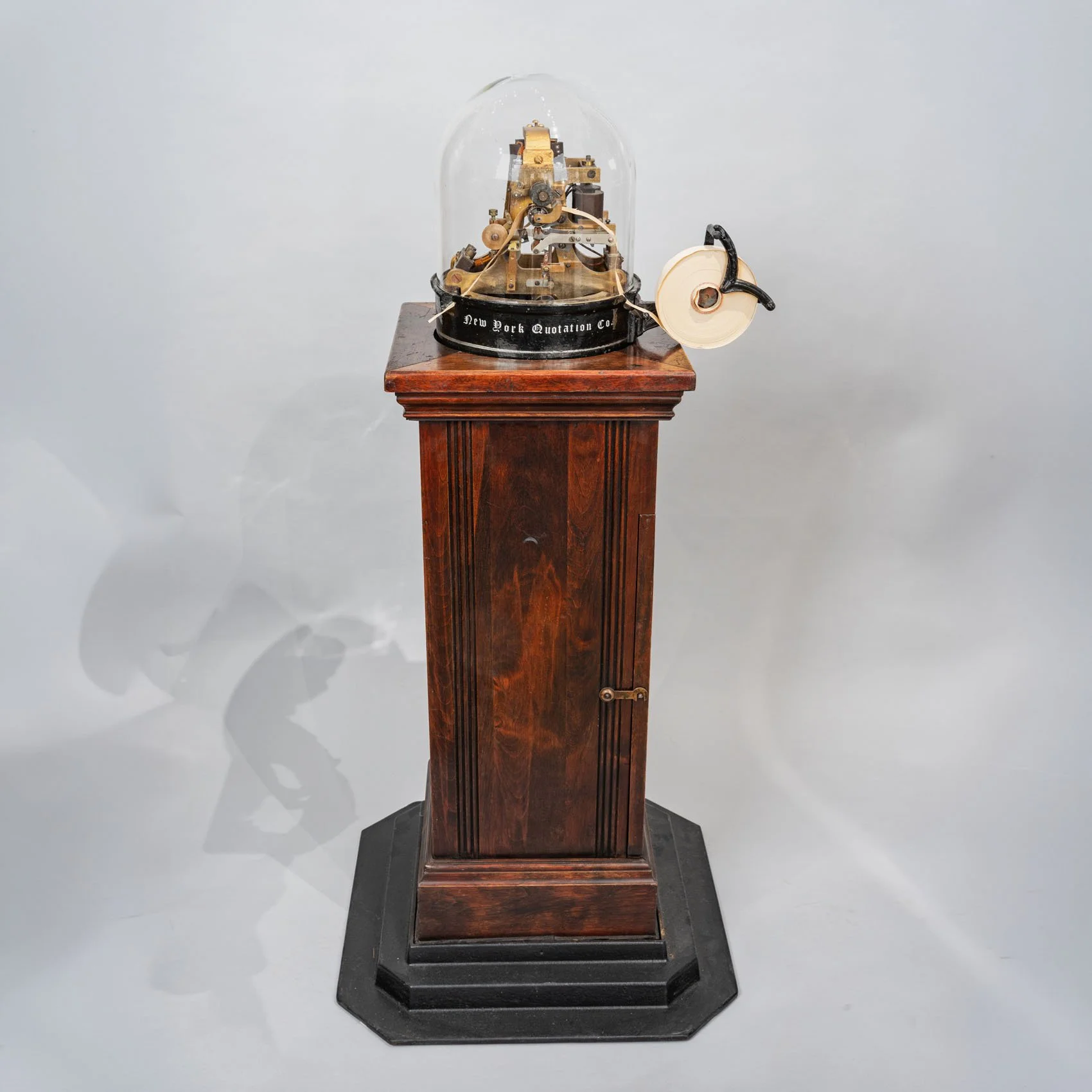
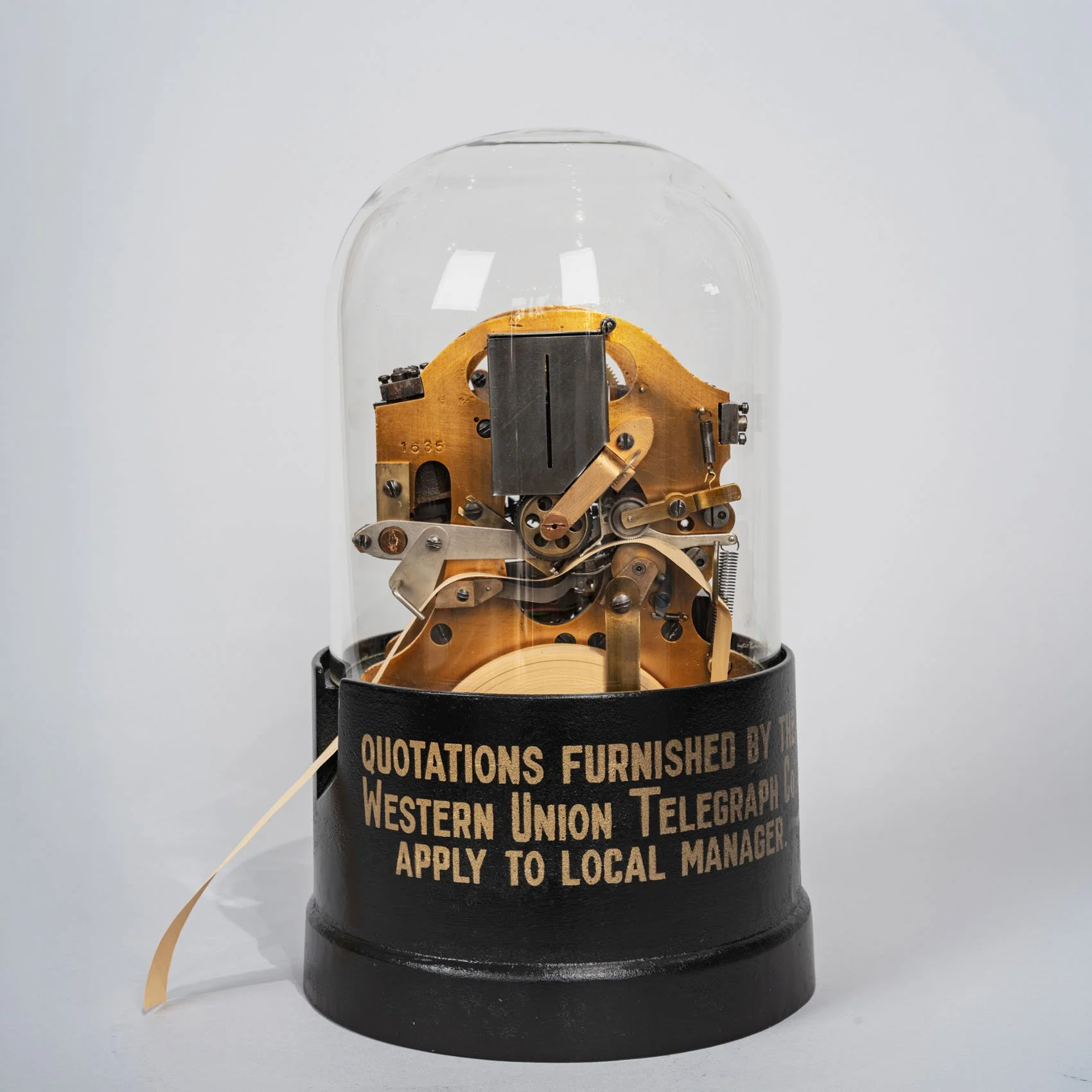
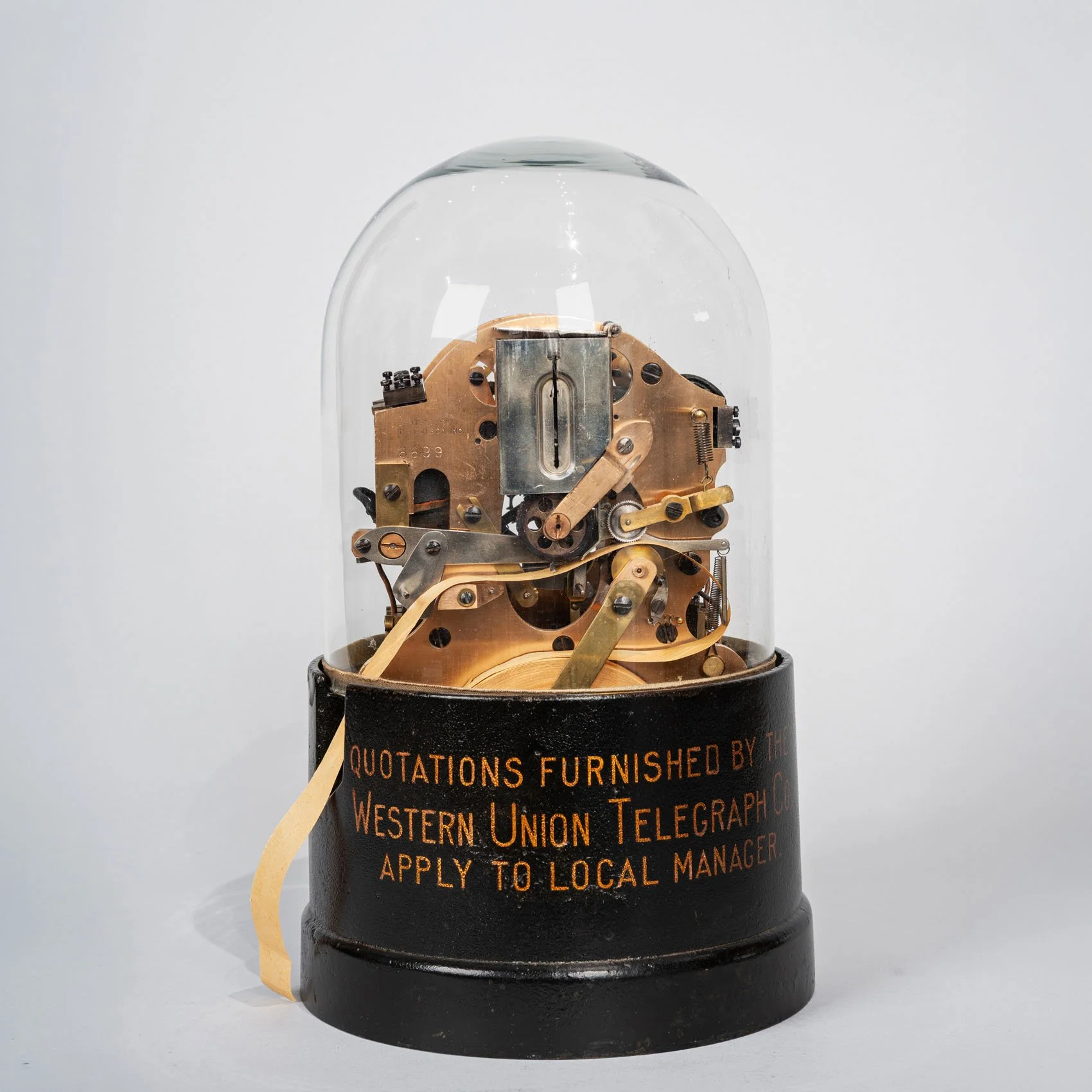
Western Union Telegraph Company
Manufactured by Thomas A. Edison, Inc.
A brass-and-steel self-winding electromechanical stock ticker, dated 1915, enclosed beneath a glass dome and mounted on a japanned base with printed Western Union service instructions.
This model was part of the nationwide ticker network operated by Western Union, receiving telegraphic impulses that transmitted stock quotations and printing abbreviated company names and prices on a continuous paper tape, providing brokers with near-real-time market information.
The self-winding system was developed by George B. Scott and W. P. Phelps, with subsequent refinements in 1903 by J. C. Barclay and Jay R. Page, resulting in a more compact and efficient machine. Although examples are frequently marked for Thomas Edison, this denotes manufacture rather than invention, as Edison’s involvement in ticker design had ceased decades earlier.
The present machine incorporates a later dual-roller ink system within a hinged enclosure, replacing the earlier single-roller arrangement and reflecting ongoing refinements made during service.
Nine principal variants of the self-winding ticker were produced—1-C, 21-C, 22-A, 30-A, 31-A, 32-A, 34-A, 35-A, and 41-A—though many machines were altered during service, and surviving examples often incorporate later components without corresponding changes in designation.
A refined and technologically mature example, illustrating the evolution of electromechanical market reporting systems that underpinned the expansion of modern financial markets.
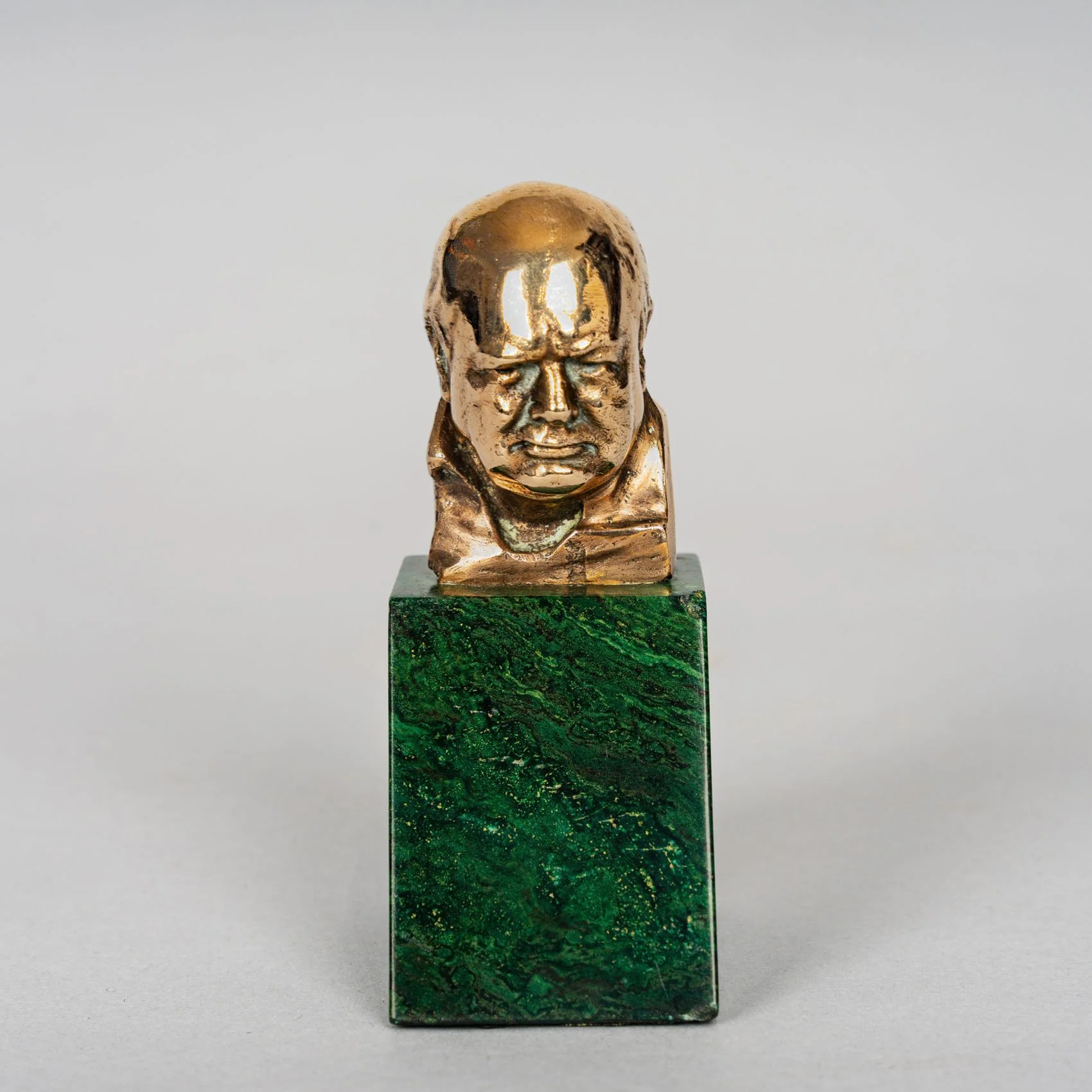
SIR WINSTON CHURCHILL (1874–1965)
A SOLID GOLD MINIATURE BUST BY Oscar Nemon
FOR Asprey & Co., BOND STREET, LONDON, CIRCA 1960
A finely cast solid gold miniature bust of Winston Churchill, with bowed head and resolute expression, the reverse incised NEMON, mounted on a substantial banded malachite plinth. Stamped Asprey & Co.
PROVENANCE
Asprey & Co., Bond Street, London
NOTE
This highly rare example belongs to the most exclusive group of portrait busts produced by Nemon following his appointment as Churchill’s principal sculptor in 1951. Granted exceptional access to the sitter, Nemon achieved what is widely regarded as the most authoritative sculptural interpretation of Churchill’s later life.
Small-scale busts of this model were retailed by Asprey, predominantly in silver; however, examples executed in solid gold were produced only in very limited numbers, almost certainly as presentation pieces, and are exceptionally rare.
The present work captures Nemon’s mature treatment of the subject: the heavy-lidded gaze, deeply modeled brow, and compressed mouth conveying the psychological gravity of Churchill’s wartime leadership. The use of gold heightens the immediacy of the likeness, while the richly veined malachite plinth—traditionally reserved for luxury and diplomatic objects—reinforces its status as a work of presentation quality.
Height: 3.75”
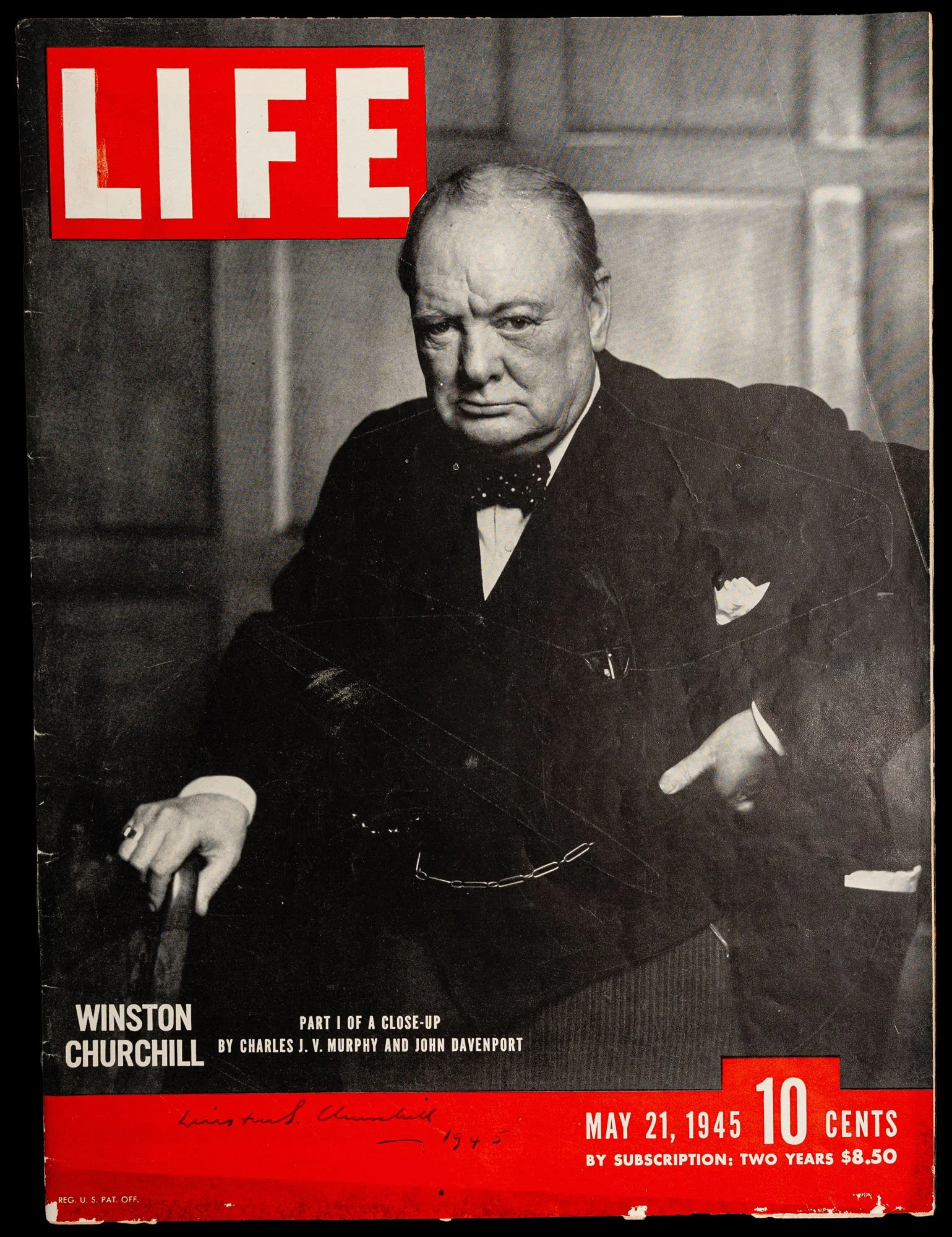
Life magazine, 21 May 1945
Signed by Winston Churchill
Featuring the portrait by Yousuf Karsh
The 21 May 1945 issue of Life magazine, featuring the iconic portrait of Winston Churchill by Yousuf Karsh, signed "Winston S Churchill 1945" in ink on the lower cover.
The present issue was published immediately following Victory in Europe and captures Churchill at the height of his international standing. The cover photograph, taken by Yousuf Karsh in December 1941, followed Churchill’s address to the Canadian Parliament shortly after the attack on Pearl Harbor.
According to Karsh’s own account, moments before the photograph was taken, he removed Churchill’s cigar from his mouth, prompting the statesman’s now-famous scowl. The resulting image—later titled The Roaring Lion—became the most enduring and widely recognized photographic likeness of Churchill, emblematic of defiance and wartime resolve.
Copies of this issue signed by Churchill are rare. Those inscribed and dated in 1945 are particularly desirable, situating the autograph firmly within the historical moment commemorated by the magazine itself.
The combination of Karsh’s celebrated portrait and Churchill’s signature creates an object that transcends its original function, uniting iconic imagery and autograph in a single contemporary artifact of the Second World War.
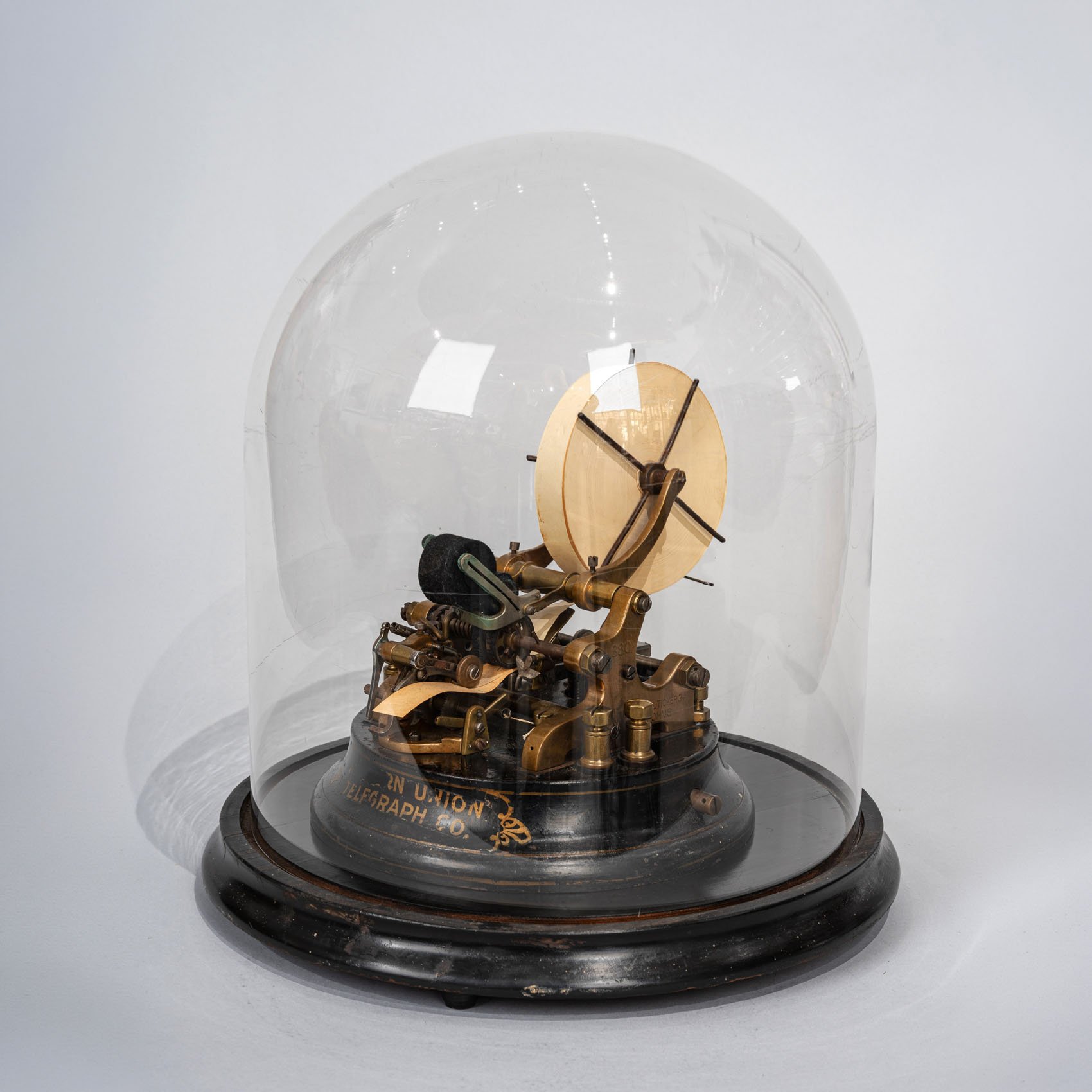
UNIVERSAL STOCK TICKER, MODEL 3A
Western Union Telegraph Company, 1887
Manufactured by D. & H. Precision Tool Co.
A brass and steel electro-mechanical stock ticker, Model 3A, dated 1887, mounted on a japanned base with gilt Western Union Telegraph Co. lettering and enclosed beneath a glass dome. The mechanism is stamped UNIVERSAL TICKER 3A – 22 OHMS and D. & H. PRECISION TOOL CO., NEWARK, N.J., and retains its clockwork-driven paper tape printing system.
This instrument formed part of the communications infrastructure that underpinned the development of modern financial markets in the United States during the late nineteenth century. Connected to the extensive telegraph network of the Western Union Telegraph Company, the ticker received electrical signals transmitting stock quotations from centralized exchanges, including the New York Stock Exchange. These signals were translated mechanically into printed abbreviations and prices on a narrow paper tape, enabling brokers to monitor market activity in near real time.
The introduction of the stock ticker in 1867 marked a fundamental shift in the dissemination of financial information, replacing slower, manually relayed systems with automated transmission. By the 1880s, the Universal ticker had become the dominant standard, valued for its reliability and compatibility across the national telegraph network.
The mechanism exemplifies the integration of electrical and mechanical engineering characteristics of the period. Battery-powered, the device converts telegraphic impulses into synchronized mechanical motion, regulating the advance of paper tape, the inking system, and the printing type. The incorporation of Thomas Edison's innovations, including the screw-thread unison mechanism, improved accuracy and coordination between transmitting and receiving units.
Beyond its technical function, the stock ticker became an enduring symbol of financial modernity. Its continuous stream of printed data shaped the rhythms of trading floors and contributed to the emergence of a national, interconnected market economy.
A comparable example is held in the Smithsonian's National Museum of American History (catalog no. 332283), reflecting the model’s recognized significance in the history of communications and finance.
SIGNIFICANCE
The Universal stock ticker occupies a pivotal place in the history of information technology, representing one of the earliest systems to automate the transmission and recording of data over long distances. It stands at the intersection of telegraphy, mechanical engineering, and financial systems, anticipating later developments in electronic trading and real-time data networks.
✯ Daniels Insights ✯
Latest from our Blog
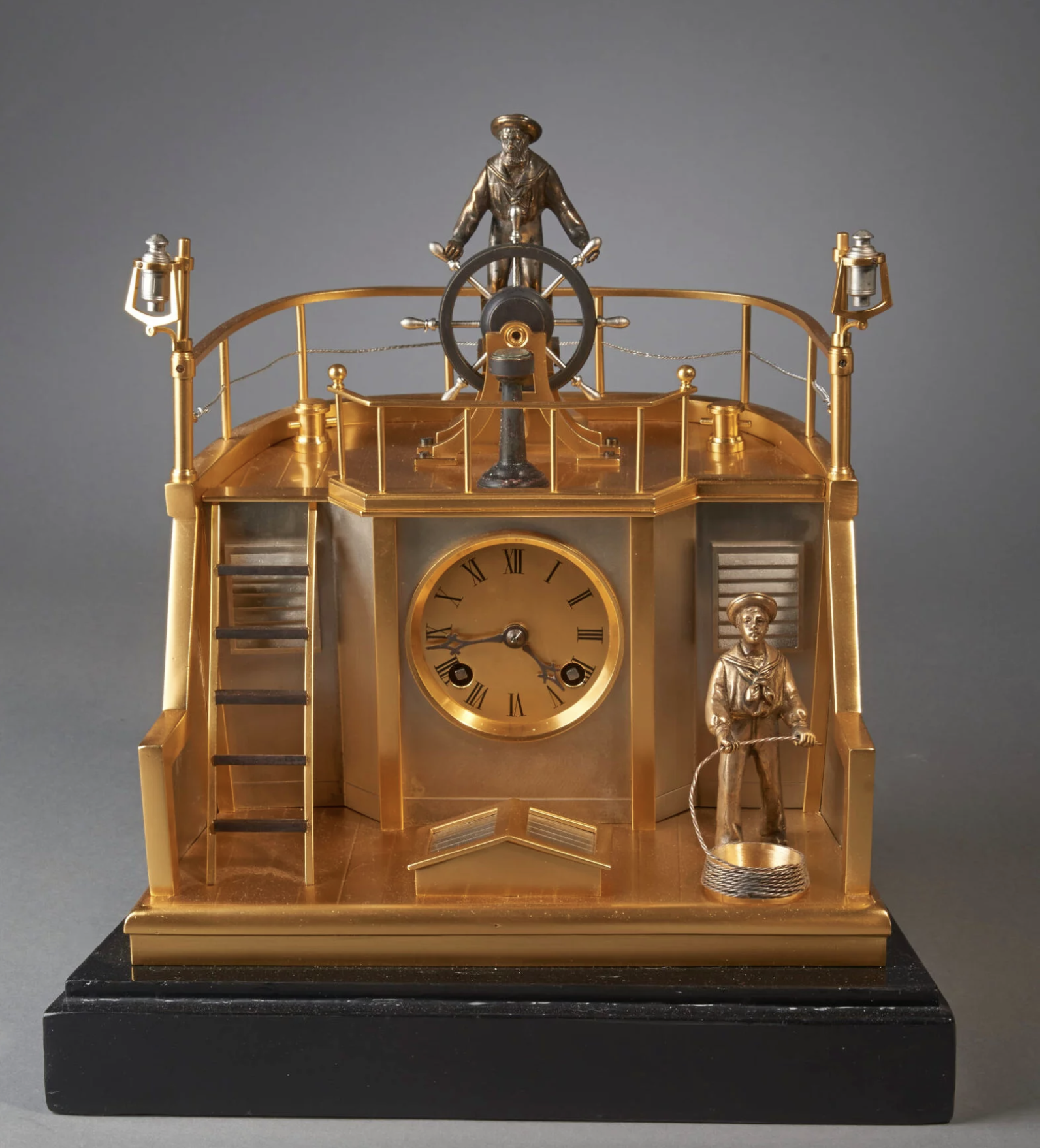
Not much is known about the man himself, but what we do know about A.R. Guilmet almost exclusively relates to the way that his craft has withstood the test of time, and is as coveted today, if not more, as it was when it was created. The renowned horologer did not get his start with clocks, but instead, he first was concerned with other aspects of mechanics and engineering.